




Pepper Spray was sprayed inside parliament house by a MP on 13th Feb 2014
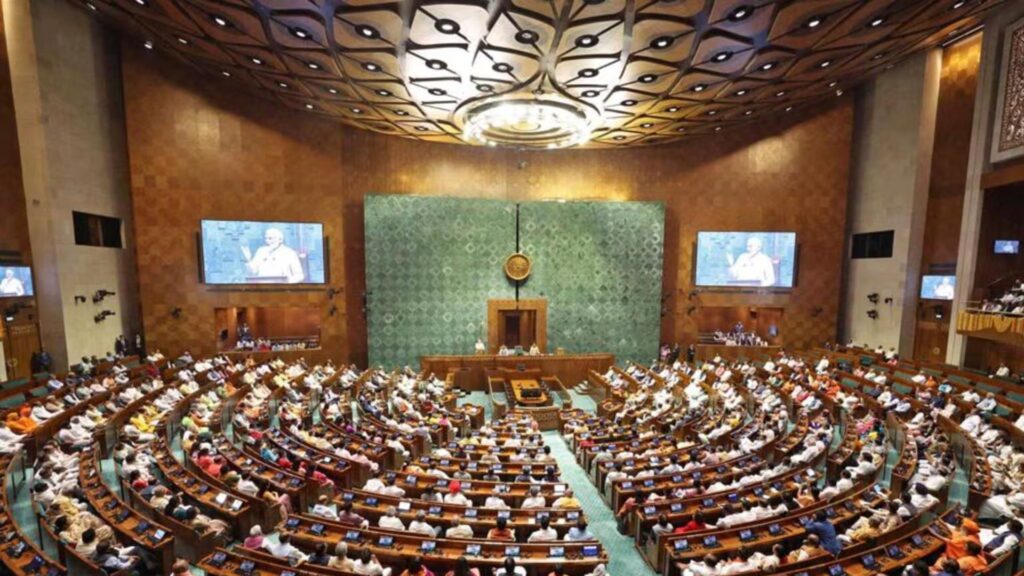
The primary purpose of Indian Parliament which consists of Lok Sabha & Rajya Sabha is to represent the people, make laws, hold the government accountable, and safeguard India’s democratic system. Every year Parliament sessions are held three time called Budget Session , Monsoon Session and Winter Session . These three sessions totally add up to 9 week of duration / year where in Member of Parliament ( MP ) attend the Parliament and debate public issues, oversee the government, approve national finances, and shape the country’s future .
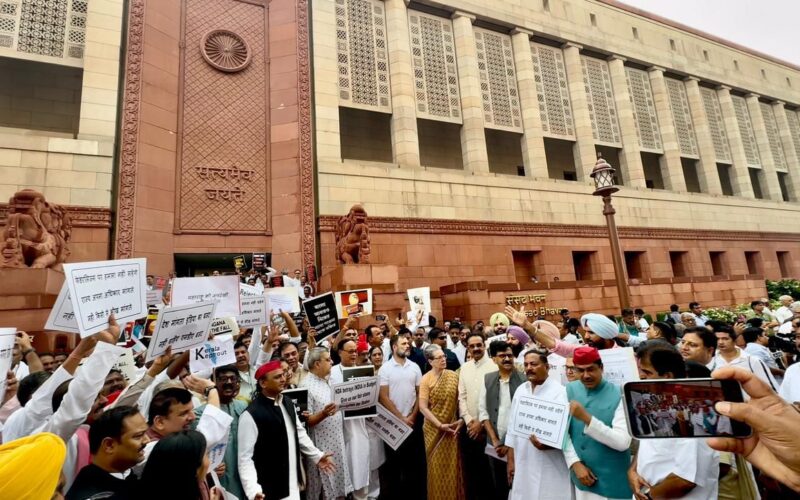
But the conduct of few Members of Parliament and their associated parties are not in line with the spirt of Parliament functioning . Almost every year and all three session session is marred with rowdy behaviours of few of the MPs. Thus the function of Parliaments suffers due to –
- Frequent adjournments
- Boycotts and walkouts
- Slogan shouting
- Protests inside the House
- Refusal to participate in Question Hour
- Interruptions during speeches
- Protest Banner displaying
- Not seating in their dedicated seats
- Blocking the entrance of the parliament
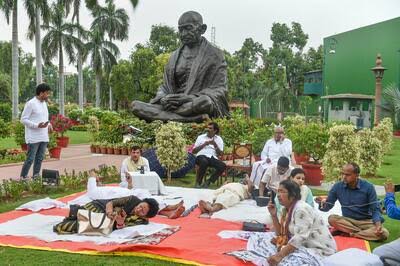
- Protest out side the Parliament lawn
- Not attending parliament session at all
MP Attendances –
In general MP attendances during parliament session is good which is usually 80% . There are many MPs who score 100% in attending all the Parliament session . But there are also MPs who get elected but never bothered to attend the Parliament , which is their prime duty. Eg During Lok Sabha 2019-2024 the MP below did nothing to strengthen the functioning of Parliament and remained absent during parliament sessions. Such type of Parliamentarian are not good for the proper democratic functioning of the Govt.
| MP | Party | Attendance %age |
| Atul Kumar Singh | BSP | 1.5% |
| Abhishek Banerjee | TMC | 15% |
| Sunny Deol | BJP | 17% |
| Sukhbir Singh Badal | Shiromani Akali Dal | 20% |
Longest Serving MPs in Indian Parliament –
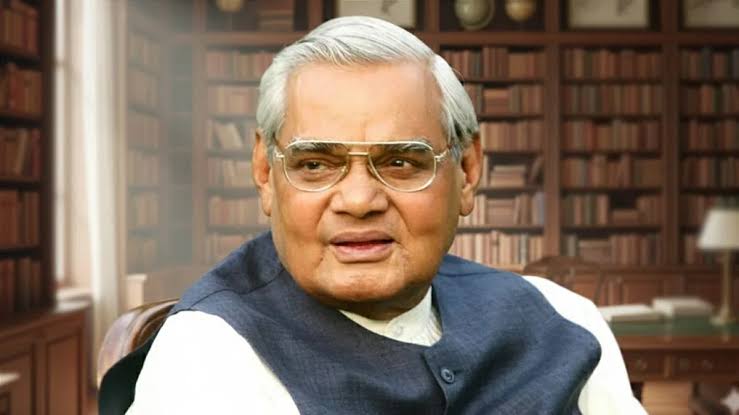
There have been MPs of great characters and discipline and have serve the parliament for long duration . They participated 100% in function of Parliament with full involvement and dedication.
| Rank | MP | Total Parliamentary Service | House(s) |
| 1 | Indrajit Gupta | 43 years, 355 days | Lok Sabha |
| 2 | Atal Bihari Vajpayee | 43 years, 250 days | Lok Sabha & Rajya Sabha |
| 3 | Najma Heptulla | About 37 years | Rajya Sabha |
| 4 | Ram Vilas Paswan | More than 36 years | Lok Sabha & Rajya Sabha |
| 5 | L. K. Advani | More than 35 years | Lok Sabha & Rajya Sabha |
Responsibilities of a MP inside the Parliament
Most Indians expect their MPs to uphold the dignity of Parliament and represent their interests responsibly. While people may differ on political views, there is broad agreement on how MPs should conduct themselves inside Parliament. What Indians Expect from an MP Inside Parliament
1. Maintain Decorum
- Speak respectfully.
- Follow parliamentary rules.
- Avoid abusive or unparliamentary language.
- Respect the authority of the Speaker or Chairman.
2. Participate in Meaningful Debates
- Raise issues affecting their constituents.
- Present facts and evidence.
- Offer constructive criticism rather than personal attacks.
- Contribute to improving proposed laws.
3. Attend Parliament Regularly
- Be present during important debates.
- Participate in Question Hour and Zero Hour.
- Vote on significant legislation.
4. Hold the Government Accountable
- Ask well-researched questions.
- Scrutinize government policies and spending.
- Demand transparency and accountability.
5. Represent the People
- Speak on local, state, and national issues.
- Voice the concerns of farmers, workers, youth, women, businesses, and marginalized communities.
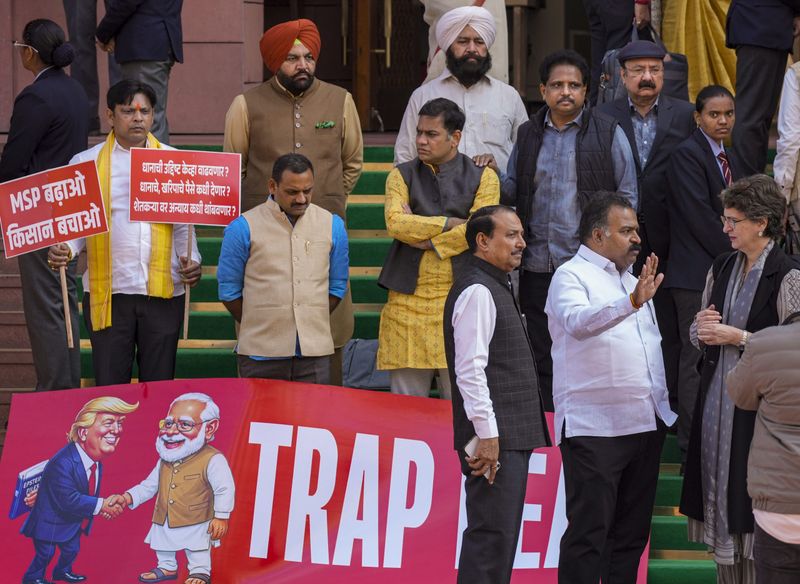
6. Avoid Disruptions
Most citizens expect MPs not to:
- Shout slogans continuously.
- Rush into the Well of the House.
- Display placards.
- Damage parliamentary property.
- Prevent debates from taking place.
- Many voters accept peaceful protest as part of democracy but expect it not to paralyze the functioning of Parliament.
7. Work Across Party Lines
- Cooperate when national interest is involved.
- Build consensus on important legislation.
- Put the country’s interests above party politics.
8. Use Public Money Responsibly
Parliament is funded by taxpayers. Citizens expect MPs to make productive use of parliamentary time rather than allow repeated adjournments.
9. Demonstrate Integrity
- Be honest and transparent.
- Avoid conflicts of interest.
- Set an example through ethical conduct.
10. Focus on Nation Building
MPs are expected to contribute to policies that promote:
- Economic growth
- Employment
- Education
- Healthcare
- National security
- Infrastructure
- Environmental protection
Conclusion
The Indian public expects MPs to use Parliament as a forum for debate, legislation, and accountability—not disorder. Citizens elect MPs to represent their interests, scrutinize the government, and help shape national policy. Strong disagreements are a natural part of democracy, but they are generally expected to be expressed through reasoned debate, adherence to parliamentary rules, and respect for democratic institutions.
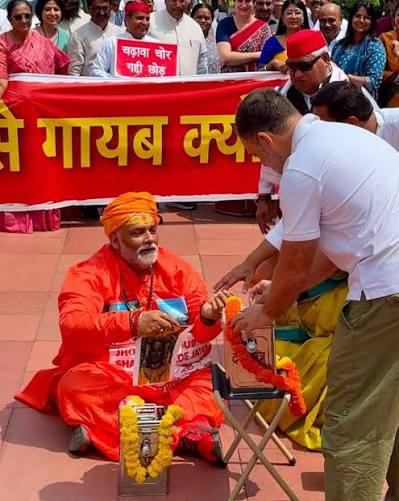
Why few MPs have rowdy behavior inside the parliament –
Most of the time Indiscipline is created by opposition parties just to create frustration for the ruling party so that parliament do not function properly. This can be from –
1. Political Polarization
Increasing rivalry between the ruling party and opposition often results in confrontation instead of constructive debate.
2. Media Attention
Televised proceedings encourage some MPs to stage dramatic protests for publicity.
3. Weak Enforcement of Rules
Although the Speaker and Chairman have powers to suspend unruly members, disciplinary action is not always consistent.
4. Lack of Consensus
Important legislation is sometimes introduced without sufficient consultation, prompting opposition protests.
5. Electoral Politics
MPs often use Parliament to send political messages to their supporters rather than participate in legislative discussion.
Disqualifications of MPs –
146 Opposition MPs (100 from Lok Sabha and 46 from Rajya Sabha) were suspended during the Winter Session after protests over the Parliament security breach. Now a days it has become a fashion to disrupt the parliament by that opposition party almost in every session , reason can be childish .
How much it cost to run Parliament every day –
A single working day of the Indian Parliament is estimated to cost taxpayers around ₹9–10 crore. Every hour lost to disruption reduces the time available for debating laws, scrutinizing government actions, and representing citizens, while the operating costs of Parliament continue to be incurred.
Estimated per day Cost –
| Year/Estimate | Estimated Cost |
| 2018–2021 estimates | ₹10 crore + per sitting day |
| 2025–2026 estimates | ₹15 crore + per sitting day (based on operating costs, salaries, security, staff, broadcasting, and administration) |
What Does This Cost Includes ?
The expenditure covers:
- Salaries and daily allowances of Members of Parliament
- Salaries of parliamentary secretariat staff
- Security personnel
- Interpretation and translation services
- Live television broadcasting
- Information technology and digital infrastructure
- Maintenance of the Parliament building
- Electricity, air conditioning, housekeeping, and other administrative expenses
MP salaries and allowances themselves are only one part of the total cost. Current MP salary and allowance rates are prescribed by law and were revised in 2025 based on the Cost Inflation Index.
Cost of Disruptions
If a full day’s proceedings are lost due to protests or repeated adjournments:
Estimated public cost: ₹9–10 crore for that day.
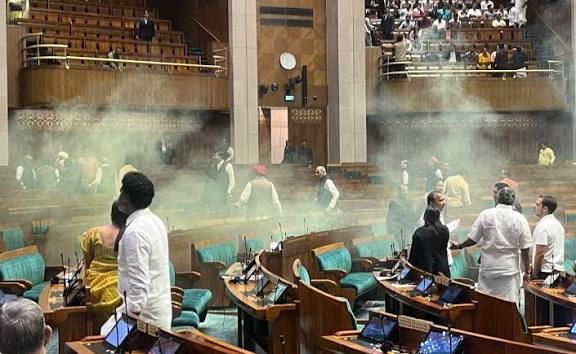
Serious indiscipline inside Parliament
The most serious and widely regarded as the worst incident in the history of the Indian Parliament occurred on 13 February 2014 during the debate on the Andhra Pradesh Reorganisation Bill (Telangana Bill).
1. Pepper Spray Incident (13 February 2014) – The Worst Ever
This incident is widely considered unprecedented because it involved the use of a chemical irritant inside the Lok Sabha.
What happened ?
- Congress MP Lagadapati Rajagopal opposed the creation of Telangana.
- During the debate, he released pepper spray inside the Lok Sabha.
- Several MPs experienced breathing difficulties, coughing, and burning eyes.
- Some MPs required medical treatment and were taken to hospital.
- In the ensuing chaos:
- Microphones were torn out.
- A glass table was broken.
- Physical scuffles broke out between MPs.
Immediate consequences
- The House had to be evacuated temporarily.
- Seventeen MPs from Andhra Pradesh were suspended.
- Political leaders across party lines described it as a “black day” and “a blot on parliamentary democracy.”
Other Major Incidents in Parliament
2. Parliament Security Breach (13 December 2023)
Although this occurred during proceedings rather than a debate, two intruders entered the Lok Sabha chamber from the visitors’ gallery, released coloured smoke canisters, and shouted slogans. The incident exposed security weaknesses and led to major investigations and suspensions of MPs over related protests.
3. Cash-for-Questions Scandal (2005)
A sting operation showed several MPs allegedly accepting money in exchange for raising questions in Parliament. Eleven MPs were expelled, marking one of the largest expulsions in parliamentary history.
4. Cash-for-Votes Controversy (2008)
During the confidence vote on the India–US nuclear agreement, opposition MPs displayed bundles of cash in the Lok Sabha, alleging they had been offered bribes to support the government. The incident severely damaged Parliament’s reputation.
5. Frequent Physical Scuffles
Over the decades, Parliament has also witnessed:
- MPs snatching papers from ministers.
- Breaking microphones.
- Throwing rule books and documents.
- Climbing onto the Speaker’s podium.
- Entering the Well of the House despite repeated warnings.
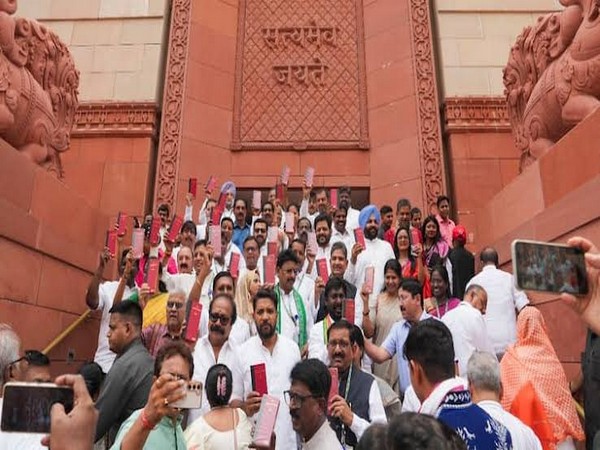
Suspending of MPs
MPs have been suspended for the entire remainder of a parliamentary session on several occasions. Such suspensions are permitted under the Rules of Procedure of both Houses.
Some of the most notable session-long suspensions include:
| Year | MPs Suspended | Reason |
| 1989 | 63 | Disorderly conduct during protests |
| 2021 | 12 (Rajya Sabha) | Unruly behaviour |
| 2023 | 146 | Protests over Parliament security breach |
| 2023 | 1 (Sushil Kumar Rinku) | Throwing papers at the Chair |
| 2026 | 1 (Kalyan Banerjee) | Unparliamentary remarks |
Injuries to MP at Parliament Complex
There have been several occasions when MPs have been injured during scuffles, violent disruptions, or chaotic incidents associated with Parliament. Major incidents are listed below –
| Year | Incident | Injuries |
| 2014 | Pepper spray during Telangana Bill debate | Several MPs affected by pepper spray; some required hospital treatment |
| 2024 | Scuffle during protests in Parliament complex | BJP MPs Pratap Sarangi and Mukesh Rajput suffered head injuries and were hospitalized |
What Indian Voters expects from a MP inside Parliament ?
While people may differ on political views, there is broad agreement on how MPs should conduct themselves inside Parliament . People elect MPs to debate, deliberate, and decide—not merely to disrupt. The true measure of an MP is not how loudly they protest, but how effectively they represent the people and contribute to the nation’s progress
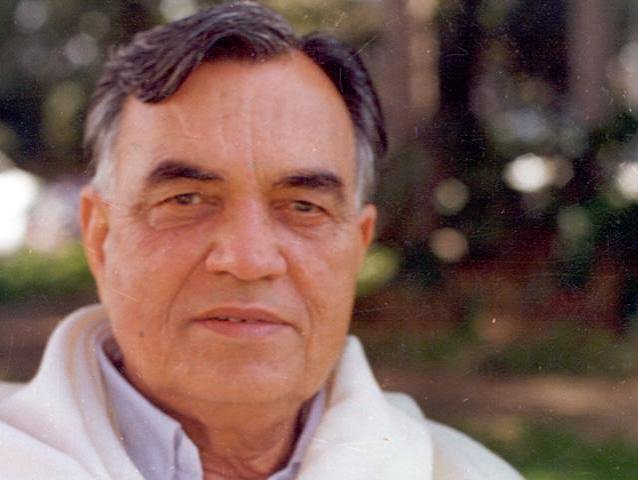
What Indians Expect from an honest MP
1. Maintain Decorum – Speak respectfully , Follow parliamentary rules ,Avoid abusive or unparliamentary language and respect the authority of the Speaker or Chairman.
2. Participate in Meaningful Debates – Raise issues affecting their constituents , Present facts and evidence and Offer constructive criticism rather than personal attacks.
3. Attend Parliament Regularly – Be present during important debates and Vote on significant legislation.
4. Represent the People – Speak on local, state, and national issues and Voice the concerns of farmers, workers, youth, women, businesses, and marginalized communities.
5. Avoid Disruptions –
Citizens of India do not expect MPs to:
- Shout slogans inside Parliament .
- Rush into the Well of the House.
- Display placards and throw papers in the air .
- Damage parliamentary property.
- Prevent debates from taking place.
6. Work Across Party Lines – Cooperate when national interest is involved , Build consensus on important legislation and Put the country’s interests above party politics.
7. Use Public Money Responsibly – Parliament is funded by taxpayers. Citizens expect MPs to make productive use of parliamentary time rather than allow repeated adjournments.
8. Focus on Nation Building
MPs are expected to contribute to policies that promote:
Economic growth , Employment , Education , Healthcare , National security , Infrastructure and Environmental protection
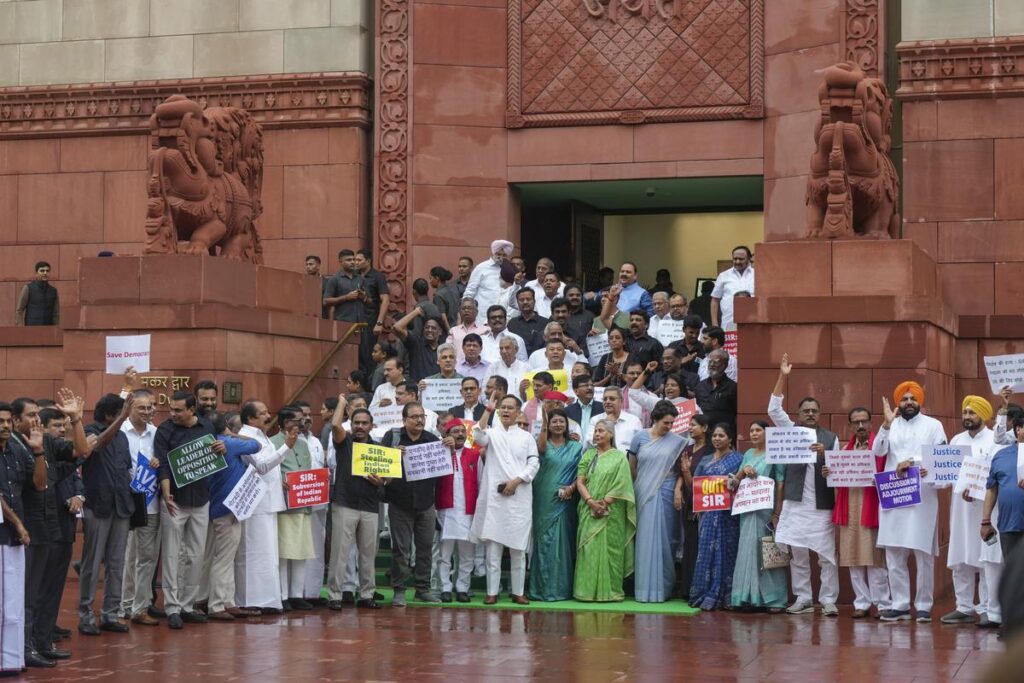
Conclusion –
The Indian public expects MPs to use Parliament as a forum for debate, legislation, and accountability—not disorder , Protest and shutting Parliament proceeding. Citizens elect MPs to represent their interests, scrutinize the government, and help shape national policy. Strong disagreements are a natural part of democracy.
Since 2010, repeated protests and disruptions to Parliament functioning have resulted in the loss of an estimated 1,500–2,000 parliamentary working hours—equivalent to roughly 250–330 sitting days. This costs more than Rs 4,500 Crores to the Govt ( ie people money wasted ) . Indians do not wish to see Rowdy Political parties and MPs to make mockery of India’s Parliament functioning.
