







Iran fought war with Iraq for 8 years ( against Saddam Hussain army ) and won the war
Iran evolved from ancient empires to a modern nation-state. A land of Alexander the Great , It has maintained a strong cultural identity despite invasions and changes. A major turning point was the shift to Shi’a Islam in the 1500s and the 1979 Islamic revolution lead by Ayatollah Khomeini .
| Description | Details | |
| Area | 1.60 Million Km2 | Half of India size |
| Population | 92 Million | Equal of Madhya Pradesh |
| Literacy | 89% | India 80% |
| GDP | 1.6% | Shah Time 9.8% |
| Army | 610,000 | Plus Reserve 350,000 |

History –
The history of Iran (historically known as Persia) is one of the oldest and richest in the world, spanning thousands of years. The history of Iran (historically known as Persia) is one of the oldest and richest in the world, spanning thousands of years. Here’s a clear overview of its major periods:
1. Ancient Iran (before 651 CE)
Elamite Civilization (c. 2700–539 BCE) – One of the earliest civilizations in southwestern Iran. Centered in Susa. Eventually conquered by the Persians.
Achaemenid Empire (c. 550–330 BCE) – Founded by Cyrus the Great. First Persian Empire; stretched from Egypt to India. Known for tolerance of cultures and religions. Conquered by Alexander the Great.

Seleucid & Parthian Periods (330 BCE–224 CE)- After Alexander, Greek rulers (Seleucids) controlled Iran. Later replaced by the Parthian Empire, known for resisting Rome.
Sasanian Empire (224–651 CE)- Last great pre-Islamic Persian empire. Strong centralized state; Zoroastrianism was dominant. Fell to Arab Muslim armies.
2. Islamic Era (651–1501)
Arab Conquest (7th century) – Iran became part of the Islamic Caliphate. Gradual conversion from Zoroastrianism to Islam.
Persian Cultural Revival – Despite Arab rule, Persian language and identity re-emerged. Important contributions to science, literature, and philosophy (e.g., Avicenna, Ferdowsi).
Turkic & Mongol Rule – Various dynasties (Seljuks, Ghaznavids).
Mongol invasion (13th century) devastated the region. Later stabilized under the Timurids.
3. Safavid Empire (1501–1736) – Founded by Shah Ismail I. Established Shi’a Islam as the state religion (still central today). Strengthened Iranian identity and borders. Major cultural and architectural achievements.

4. Afsharid, Zand & Qajar Periods (1736–1925)
Afsharid & Zand Dynasties – Short-lived but notable (e.g., Nader Shah expanded territory).
Qajar Dynasty – Iran weakened politically. Lost territory to Russia. Increasing influence from Britain and Russia.
5. Pahlavi Era (1925–1979)
Founded by Reza Shah Pahlavi.
Modernization and secularization efforts.
His son, Mohammad Reza Shah, ruled after him.
Strong Western ties but growing internal opposition.
6. Islamic Republic (1979–Present – Khomeini Era )
Iranian Revolution (1979)
Overthrew the Shah.
Led by Ayatollah Khomeini.
Established an Islamic theocratic republic.
Still being ruled as an Islamic state of Iran

Monarchy in Iran –
Iran was a monarchy for thousands of years .The ruler was called the Shah .Last monarchy: Pahlavi dynasty Ended in 1979 revolution and Replaced by an Islamic Republic
Monarchy in Iran (Simple Explanation)
Iran was a monarchy for over 2,500 years—one of the longest continuous royal traditions in world history—until it ended in 1979. A monarchy means the country was ruled by a king, called the Shah (or Shahanshah, meaning “King of Kings”).
1. Long Tradition of Kings (Ancient → Modern)
Iran had many royal dynasties, such as:
Achaemenid Empire (Cyrus the Great)
Sasanian Empire
Safavid Dynasty
Qajar Dynasty
Pahlavi Dynasty
All these were ruled by kings, making monarchy the main system of government for centuries.
2. Constitutional Monarchy (1906–1979)
In 1906, Iran changed from absolute monarchy to a constitutional monarchy: A parliament (Majlis) was created . The Shah still had power but was supposed to share it with elected representatives . Democracy was limited at times
3. The Pahlavi Dynasty (Last Monarchy)
Reza Shah Pahlavi (1925–1941) – Founded the last royal dynasty .Modernized Iran (schools, railways, army) . Ruled in an authoritarian way
Mohammad Reza Shah (1941–1979)
Continued modernization (White Revolution)
Close ties with Western countries
Faced criticism for:
Political repression
Inequality
Lack of democracy

4. End of Monarchy – 1979 Revolution
Iranian Revolution
Massive protests against the Shah
Religious leader Ayatollah Khomeini led the movement
The Shah fled Iran . Monarchy was abolished in 1979
Iran became an Islamic Republic
5. After Monarchy
No king since 1979
Iran is now ruled by a Supreme Leader (religious authority) instead of a monarch
Some people still support restoring monarchy, but it is not in power today

Life During Shah Regime –
Life in Iran under Mohammad Reza Shah Pahlavi (1941–1979) was complex and mixed—some people experienced rapid progress and modern lifestyles, while others faced inequality and political repression.
Here’s a clear, balanced view:
1. Modern & Westernized Lifestyle (Especially in Cities)
Big cities like Tehran became modern and Western-style
People wore Western clothes (women often without hijab)
Cinema, music, nightlife, and universities expanded
Women gained more rights: Right to vote , Access to education and jobs
For middle and upper classes, life felt modern, global, and progressive.
2. Education & Social Reforms
The Shah launched the White Revolution:
Built schools and increased literacy
Sent teachers to villages (Literacy Corps)
Land reforms gave land to some farmers
Workers got profit-sharing in industries
Education improved . Society became more modern

3. Economic Growth (But Inequality)
Oil money led to rapid economic growth
Cities developed quickly (roads, industries, infrastructure)
Iran became one of the fastest-growing economies in the region
Rich became much richer
Rapid urbanization caused overcrowding
4. Lack of Political Freedom
This is one of the biggest criticisms of the Shah:
Iran was not a true democracy
Opposition parties were suppressed
Secret police (SAVAK) monitored and punished critics
After the 1953 coup, the Shah became more authoritarian .People could live freely socially, but not politically.
5. Tension with Religion & Tradition
The Shah pushed secular (non-religious) policies
Westernization angered many religious groups
Clerics and traditional communities felt threatened
This created strong opposition, especially from religious leaders.
6. Why People Became Unhappy
Despite development, many people were dissatisfied:
Inequality between rich and poor . Lack of political freedom .
Corruption and elite lifestyle of the royal family
Cultural conflict (Western vs Islamic values)
These tensions led to the 1979 revolution.
The last Shah of Iran, Mohammad Reza Shah Pahlavi, was dethroned during the Iranian Revolution because of a combination of political, economic, social, and religious reasons.
Main Reasons Why the Shah Was Overthrown
1. Authoritarian Rule (No Democracy)
The Shah ruled like a dictator, especially after the 1953 coup
Political parties were weak or banned. People had no real political freedom Secret police (SAVAK) arrested, tortured, or silenced critics
2. Economic Problems & Inequality
Iran became rich from oil, but:
Wealth was unevenly distributed
Inflation increased in the 1970s
Cost of living rose
Many poor and middle-class people felt left behind

3. Rapid Modernization (White Revolution)
The Shah tried to modernize Iran very quickly:
Land reforms
Industrial growth
Western-style lifestyle
4. Religious Opposition
The Shah promoted Western and secular values
Many religious leaders opposed him
A key leader was Ruhollah Khomeini:
Criticized the Shah as anti-Islamic
Became the main voice of opposition
5. Anger at Foreign Influence
The Shah was seen as too close to:
USA
Western countries
Especially after the 1953 CIA-backed coup, many Iranians felt:
Their country was controlled by foreign powers
6. Mass Protests (1978–1979)
Millions of people protested: Students , Workers , Religious groups , Intellectuals
Government crackdowns killed protesters → which increased anger
Protests kept growing until the system collapsed

7. Shah Lost Support & Fled
The army stopped fully supporting him
He left Iran in January 1979
The monarchy collapsed
Ruhollah Khomeini returned and took power
Why Khomeini sent on Exile by Shah of Iran –
Ruhollah Khomeini lived in exile mainly because he strongly opposed the Shah’s government and its policies.
Here’s a clear explanation

1. Open Opposition to the Shah
Khomeini criticized Mohammad Reza Shah Pahlavi publicly
He called the Shah:
A tyrant
A ruler serving Western (especially U.S.) interests
This made him a major political threat.
2. Opposition to the “White Revolution”
The Shah introduced reforms called the White Revolution (1963):
Land reforms
Women’s voting rights
Western-style modernization
Khomeini opposed these because he believed:
They were against Islamic values
They reduced the power of religious leaders
He gave fiery speeches against these reforms.
3. Protests After His Arrest
In 1963, Khomeini was arrested
His arrest triggered mass protests across Iran
Many people were killed in clashes
This showed the government how influential he had become.
4. US Criticism of Foreign Influence
In 1964, Khomeini strongly opposed a law giving immunity to American personnel in Iran
He said Iran was becoming a puppet of foreign powers
This angered the Shah even more.
5. Exile to Remove His Influence
In 1964, the Shah’s government arrested and exiled him
He was sent to:
Turkey → Iraq → later France

Return of Khomeini from Exile –
Khomeini’s return from exile in 1979 triggered the final phase of the Iranian Revolution, ending the Shah’s rule and transforming Iran into an Islamic state.The Return of Ruhollah Khomeini from exile was a major turning point in Iran’s history and led directly to the Iranian Revolution.
What happened?
Ruhollah Khomeini had been living in exile for about 15 years (mostly in Iraq and later France).
He strongly opposed the rule of Mohammad Reza Shah Pahlavi (the Shah of Iran).
On 1 February 1979, Khomeini returned to Iran from France.
Millions of people welcomed him in Tehran.
Why was he in exile?
The Shah had exiled Khomeini in 1964 because:
He criticized the government
He opposed Western influence (especially from the U.S.)
He spoke against reforms that he believed harmed Islamic values
Why was his return important?
His return marked the collapse of the Shah’s power.
Within days: – The monarchy weakened further . Massive protests grew stronger
By February 1979, the Shah’s government had completely fallen.
What happened after?
Iran officially became an Islamic Republic.
Khomeini became the country’s Supreme Leader.
The political system changed from a monarchy to a religious-based government.

Life During Khomeini Regime with Islamic Law –
After the 1979 Iranian Revolution, Ruhollah Khomeini transformed Iran into an Islamic Republic, introducing laws and systems based on his interpretation of Shi’a Islamic principles.
Here are the main Islamic rules and changes
1. Islamic Government (Velayat-e Faqih)
Introduced the concept of Velayat-e Faqih
A top religious leader (the Supreme Leader) has ultimate authority
This meant:
Religion and politics were fully combined
Clerics gained major power over the state
2. Mandatory Hijab for Women
Women were required to wear Islamic dress (hijab) in public
Western-style clothing was restricted
Not following dress rules could lead to punishment
3. Islamic Law (Sharia-Based System)
Laws were changed to follow Islamic (Sharia) principles
Religious courts became important
4. Restrictions on Media & Culture
Western cultural influence was reduced
Music, films, and TV were regulated
Censorship increased . Content had to follow Islamic values
5. Ban on Alcohol & Certain Activities
Alcohol was banned
Gambling and nightclubs were prohibited
Public behavior had to follow Islamic morality

6. Changes in Women’s Rights
Some rights gained under the Shah were reversed
Laws emphasized traditional family roles
7. Islamization of Education
Schools and universities were changed: – Islamic teachings emphasized . Western influence reduced
8. Religious Policing
Systems developed to enforce Islamic behavior . Public morality monitored . Ensured people followed dress and conduct rules
Overall Impact
For Supporters:
Created a society based on Islamic values
Reduced Western influence
For Critics:
Limited personal freedoms
Restricted women’s rights
Reduced freedom of expression

US Embassy Hostage Crisis – 444 days – 52 Hostages
The capture of American embassy staff in Iran in 1979 (called the Iran Hostage Crisis) did not happen suddenly—it was the result of deep anger, fear, and political tensions built over many years.
Main Reasons Behind the Hostage Crisis
1. Hatred of the U.S. due to the Shah
The U.S. strongly supported Iran’s former ruler, Mohammad Reza Shah Pahlavi
Many Iranians saw him as: A dictator . A puppet of the U.S.
This created strong anti-American feelings after the revolution
2. Memory of the 1953 Coup
In 1953, the U.S. (CIA) helped overthrow Iran’s elected government and restore the Shah
This event made many Iranians believe: “America interferes in our country”
This historical resentment was a major cause of anger
3. Shah Allowed into the U.S. (Trigger Event)
In October 1979, the Shah was allowed into the U.S. for medical treatment
Many Iranians feared:
The U.S. might bring him back to power again . This directly triggered protests and anger
4. Embassy Seen as a “Spy Center”
Protesters believed the U.S. embassy in Tehran was: A place of spying and plotting . A symbol of U.S. control . So it became the main target

5. Students Seized the Embassy
On November 4, 1979, Iranian students loyal to
Ruhollah Khomeini stormed the U.S. embassy
They captured 66 Americans and held 52 for 444 days
6. Their Main Demands
The hostage-takers demanded:
Return the Shah to Iran for trial
Stop U.S. interference in Iran
Return Iranian wealth held abroad
The U.S. refused → crisis continued
7. Support from Khomeini
Khomeini supported the takeover
He used it to: – Strengthen his power . Unite people against a common enemy (USA)
This made the situation much worse and longer

Iran – Iraq War ( 1980 to 1988 ) :
Iraq invaded Iran because Saddam Hussein wanted more power and territory, thought Iran was weak after its revolution, and feared Iran’s religious influence spreading into Iraq.
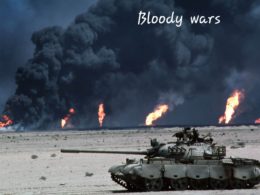
The Iran–Iraq War was one of the longest and deadliest conflicts of the 20th century, fought between Iran and Iraq from 1980 to 1988.
1. Causes of the War
Territorial Disputes
Conflict over the Shatt al-Arab, an important waterway for oil exports
Political & Ideological Tension
Iran became an Islamic Republic after the Iranian Revolution
Iraq, led by Saddam Hussein, feared the spread of Islamic revolution
Regional Rivalry
Power struggle for dominance in the Persian Gulf

2. Beginning of the War (1980)
In September 1980, Iraq invaded Iran
Saddam expected a quick victory due to Iran’s post-revolution instability
But Iran resisted strongly, turning it into a long war
3. Major Phases of the War
Phase 1: Iraqi Advance (1980–1982)
Iraq captured border territories
Iran eventually pushed Iraqi forces back
Phase 2: Iranian Counterattacks (1982–1986)
Iran went on the offensive
Tried to invade Iraq but failed to achieve decisive victory
Phase 3: War of Attrition (1986–1988)
Stalemate with heavy losses
“Tanker War” attacks on oil ships in the Persian Gulf
Use of chemical weapons by Iraq

4. Role of Other Countries
United States and some Arab states supported Iraq
Soviet Union also backed Iraq
Iran was relatively isolated
5. End of the War (1988)
Ended with a UN-brokered ceasefire
Based on United Nations Resolution 598
No clear winner — borders remained mostly unchanged

Rescue of American hostage from Tehran by USA –
Failed Operation Eagle Claw of US
The U.S. rescue attempt to free its embassy hostages in Iran in 24/8/1980—called Operation Eagle Claw—failed mainly due to technical problems, bad weather, and poor planning/coordination.
1. Helicopter Failures (Major Reason)
The mission needed at least 6 working helicopters
But: 2 helicopters broke down before reaching Iran and 1 more failed after landing
Only 5 remained, so the mission had to be aborted
2. Sandstorm (Unexpected Weather)
Helicopters flew into a massive desert dust storm (haboob)
This caused: – Poor visibility , Navigation problems , Damage to aircraft systems
Pilots struggled to even reach the meeting point
3. Delays & Confusion
Aircraft arrived late (over 90 minutes delay)
Extra time caused: Fuel problems , Increased risk of discovery
The whole plan depended on perfect timing, which failed
4. Deadly Accident at Desert Base
While aborting the mission:
A helicopter crashed into a C-130 aircraft
Huge explosion followed
8 U.S. soldiers killed
Aircraft destroyed
5. Overly Complex Plan
The operation involved:
Multiple aircraft
Different military branches
A secret desert landing site
It required everything to go perfectly , But: Too many steps = high risk of failure
6. Poor Coordination Between Forces
Army, Navy, Air Force, and Marines all involved
But: Limited joint training . Weak communication and coordination . This confusion contributed to failure

Why USA and Iran are Enemy –
The hostility between the United States and Iran didn’t start suddenly—it built up over several major events, especially after the Iranian Revolution. Here’s a clear explanation:
1. 1953 Coup (Early Tension)
Iran had a democratically elected leader, Mohammad Mossadegh.
He tried to nationalize Iran’s oil (which Western countries controlled).
The U.S. and U.K. helped overthrow him in 1953
They supported Mohammad Reza Shah Pahlavi as ruler.
2. Iranian Revolution (1979)
The Shah was overthrown.
Ruhollah Khomeini came to power.
The new government was strongly anti-American, blaming the U.S. for supporting the Shah.
3. U.S. Embassy Hostage Crisis (1979–1981)
Iranian students seized the U.S. Embassy in Tehran.
52 American diplomats were held hostage for 444 days.
This event destroyed relations between the two countries.
4. Iran–Iraq War (1980–1988)
During the Iran–Iraq War, the U.S. supported Iraq.
Iran saw this as America acting against it again.
5. Ongoing Conflicts & Sanctions
The U.S. accuses Iran of:
Developing nuclear weapons
Supporting militant groups in the Middle East
Iran accuses the U.S. of: Interfering in its politics . Imposing harsh economic sanctions .
Because of this mistrust, they have remained enemies for decades.

Why Iran & Israel are enemy –
Iran and Israel are considered enemies mainly because of political, ideological, and regional conflicts—especially since the 1979 Iranian Revolution.
Here’s a clear explanation
1. Ideological Conflict After 1979
After the revolution, Ruhollah Khomeini declared:
Israel as an illegitimate state
A symbol of Western influence in the Middle East
Iran’s government openly opposes Israel’s existence
2. Support for Palestine
Iran strongly supports the Palestinian cause
It opposes Israel over its conflict with Palestinians
Iran supports groups like:
Hamas
Hezbollah
Israel sees these groups as major threats
3. Military & Security Threats
Israel fears Iran’s:
Missile program
Nuclear program
Israel believes Iran could become a nuclear threat
Iran accuses Israel of: Sabotage . Attacks on its scientists and facilities
4. Regional Power Rivalry
Both want influence in the Middle East
They support opposite sides in conflicts:
Syria
Lebanon
Gaza
5. Secret Conflicts (Shadow War)
Not a direct war, but ongoing: Cyber attacks , Assassinations . Airstrikes and target killing in Gaza , Lebanon & Yeman by Israel especially in Syria)
6. No Diplomatic Relations-
Iran does not recognize Israel as a country . No embassies or official ties . This keeps tensions very high

S
Ongoing War Iran vs USA / Israel
Iran is facing on & off Air strikes from Israel and USA mainly to protect Iranian Nuclear programme and objection to Israeli Genocide happening to Palestine in Gaza .
Eight Day war – 8 days of war happened between Iran- Israel / USA between 22nd June to 30th June 2025 . Iran used long range missiles hitting Israeli target 1400km away from Iranian shores. Israeli IDF used long rage fighter Aircraft and hit Iranian infra , nuclear and Military targets .
28th Feb 20205 – Current attack by USA/Israel – USA & Israel again attack Iran using more than 700 fighter jets , 2 Aircraft carriers , multiple Navy war ships , Missiles , Drones & heavy Bombs . This attack is totally illegal started by USA & Israel without any justification and that too without UN or NATO consent. They have done target killing of Religious leader , many ministers , Army heads by bombing their homes using guided bombs. Govt Buildings / Schools are destroyed by their superior air force .
Iran as a case of survival is using long range and intercontinental missiles and hitting heavily Major targets and city of Israel. Currently this war is on very dangerous stage and is continuing killing hundreds and destroying infra structure of Iran. Same time Iran is hitting American Bases in nearby countries .
(25/march/2026)





Iran’s transformation through history is truly fascinating. The resilience of its cultural identity despite numerous invasions is remarkable. The shift to Shi’a Islam in the 1500s must have left a profound impact on its society. The 1979 Islamic Revolution under Ayatollah Khomeini seems like a critical period that shaped modern Iran. How do you think these historical events continue to influence Iran today? It’s intriguing to see how ancient empires evolve into modern nation-states while preserving their core identity. What aspects of Iranian culture do you think have remained unchanged despite these historical shifts?